
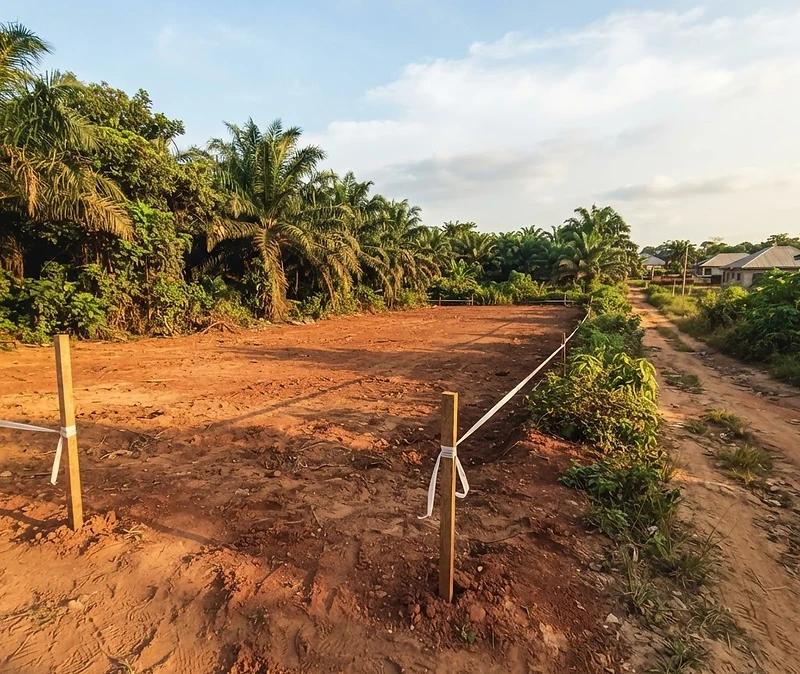
The complete guide · Abraka, Delta State
Buying Land and Building in Abraka? Read This Guide Before You Spend Your Money.
Buying land and building a home should be an exciting experience, not a financial nightmare. This comprehensive guide by NovaHA Properties walks you through every stage of the process, helping you make informed decisions, avoid common mistakes, and protect your investment in Abraka, Delta State.
Before you buy land in Abraka
Most land problems in Abraka are decided long before money changes hands. They are decided by how much planning went into the purchase, how many questions the buyer asked, and how willing the buyer was to walk away. This section is the groundwork that makes every later step easier.
Abraka is a university town on the Benin–Asaba corridor, and land here is bought for a mixture of reasons: a family home, a rental block for students, a shop on a busy road, farmland on the edge of town, or simply a long-term hold while the town grows. Each of those is a different purchase with a different set of questions.
- 01
Decide what the land is for
Residential, commercial, agricultural and investment land are not interchangeable. A plot that suits a family home may be too far from the road for a shop, and land that is cheap today may be cheap because nothing can legally be built on it. Decide your purpose first, then judge every plot against it.
- 02
Establish your budget before you start looking
Budget for the whole acquisition, not just the asking price: legal fees, survey, verification searches, documentation, registration, any agreed family or community payments, and transport for inspections. A plot you can buy but cannot document is not within your budget.
- 03
Research the location and how you would reach it
Check the distance to the town centre, the university, your workplace, schools and the expressway. Ask what the access road is like during the rainy season, and whether it is a public road or a private track that a neighbour could close.
- 04
Understand the neighbourhood and what is coming
Look at what already exists around the plot and what has been approved or started nearby. A quiet edge-of-town area can change quickly, for better or worse. Speak to people who live there rather than relying only on what a seller says about future development.
- 05
Confirm the infrastructure you will depend on
Electricity, water, roads, drainage and waste collection determine what living there actually costs. Ask where the nearest transformer is, how water is obtained in that area, and where surface water goes when it rains heavily.
- 06
Ask about flooding history and soil conditions
Low-lying plots near streams and natural drainage paths can flood, and filled land can settle unevenly. Talk to neighbours about past flooding and commission a soil investigation before you design a building, not after you have bought.
- 07
Check for government acquisition, road expansion or restricted zones
Some land is committed to government use, reserved for road expansion, or affected by planning restrictions. Confirm the plot's status with the relevant land registry and local government before committing, using the survey coordinates rather than a verbal description.
- 08
Work with a company or professional who can be held to account
A reputable real estate company, a property lawyer and a licensed surveyor give you people to hold responsible. Written terms, named contacts and traceable payments matter more than a persuasive sales pitch.
A cheap plot is not a bargain if you cannot own it
Land that is priced far below its neighbours is usually cheap for a reason: disputed ownership, an unresolved family claim, a government interest, an inaccessible site, or a seller who cannot prove they have anything to sell. Saving money on the price is meaningless if the property cannot be documented or developed.
Inspecting land: never go alone
The inspection is where you find out whether the plot on the ground matches the plot on paper. It is also the step where buyers are most exposed, because it puts you in an unfamiliar area with people who have a financial interest in your decision.
Important safety advice
Never visit a piece of land in Abraka alone, especially when dealing with unfamiliar sellers, agents or community representatives. Arrange for someone knowledgeable and trustworthy to accompany you: a reputable real estate professional, a property surveyor, a lawyer or trusted representative, or someone familiar with the local community and the area. Tell another person where you are going and when you expect to be back.
- 01
Confirm the exact location
Get the plot's coordinates or a clear landmark description in advance. On the day, confirm you are standing on the plot being sold and not on a similar plot nearby.
- 02
Check the physical boundaries
Walk the entire perimeter. Look for corner pegs, beacons or markers, and note whether the shape and size on the ground match what you were told.
- 03
Request and read the survey plan
The survey plan shows the plot's position, dimensions and coordinates. Ask for a copy before the visit, not after you have paid.
- 04
Compare the survey plan with the actual land
Take the plan to site and compare it against the ground and its surroundings. A licensed surveyor can confirm the coordinates properly; an agent's assurance is not a substitute.
- 05
Check for structures, occupants, farming or encroachment
Look for buildings, foundations, crops, fences or signs that someone else is already using the land. Ask who put them there and on what authority.
- 06
Look for signs of dispute or competing claims
Notices, fresh clearing under dispute, padlocked gates, warning signboards or neighbours who are evasive about ownership are all reasons to slow down and investigate.
- 07
Speak with community representatives where appropriate
Where the land is family or community land, ask to meet the people who actually have authority to sell, and record who said what. Do this before any payment.
- 08
Take photographs and video
Photograph the four corners, the access road, neighbouring buildings, drainage and any landmarks. Date-stamped images are useful evidence of what existed on the day you inspected.
- 09
Confirm road access and surrounding development
Check that the plot touches a road you can legally use, and that the road is not someone else's land being used by courtesy. Ask about planned developments on adjoining plots.
- 10
Arrange a professional survey and boundary verification
Have a licensed surveyor confirm the coordinates and boundaries on the ground. If the seller resists an independent survey, treat that as an answer in itself.
Never rely on descriptions alone
Do not rely solely on an agent's description, photographs, videos or verbal assurances. Pictures can be of a different plot, taken years ago, or cropped to hide a problem. Only an inspection and independent verification tell you what you are actually buying.
Verify every land document before making payment
This is the most important section of this guide. Documents are what separate a property you own from a story you were told, and no amount of confidence from a seller replaces an independent check by your own lawyer.
Do not pay for land until your lawyer has verified ownership
Do not pay for land until your lawyer has verified the ownership and all relevant documents. That means an independent legal due diligence exercise completed before you pay a deposit, a part payment or the full purchase price — not a promise to do it afterwards.
In Abraka and across Delta State, plots are sold on different kinds of title depending on how the land was first allocated. Some come with a Certificate of Occupancy, others with a registered deed of assignment, a survey plan and receipts, and others from family or community land where excision and gazette records matter. Which documents apply depends on the property, so the exercise is to establish the seller's root of title and then confirm it.
Certificate of Occupancy (C of O)
- Establish whether the seller has a valid Certificate of Occupancy, where applicable.
- Verify its authenticity with the appropriate government land registry.
- Confirm the land description and the ownership details it records.
Registered Deed of Assignment
- Confirm that the seller has a legitimate interest to transfer.
- Verify the document's registration details where applicable.
- Confirm that the seller has the legal authority to sell.
Survey Plan
- Obtain a recent, properly prepared survey plan.
- Verify the survey with the appropriate Surveyor-General's office.
- Confirm the coordinates and boundaries.
- Check for government acquisition, committed land or overlapping surveys.
Excision documents (where applicable)
- If the land is family or community land, establish the legal basis of the seller's interest.
- Verify any relevant excision and gazette records.
- Do not assume that an excision application means the land is legally free to buy.
Gazette
- Where a gazette is relied upon, verify its authenticity and the specific land covered.
- Ensure the plot actually falls within the excised area described.
Family or community ownership documents
- Establish who has authority to sell.
- Confirm the consent of the relevant family members, principal members, trustees or authorised representatives.
- Ensure the transaction is properly documented and witnessed.
Previous deeds and ownership history
- Request the previous title documents, not only the current ones.
- Establish how the current seller acquired the land.
- Investigate previous transfers, mortgages, litigation or competing claims.
Other relevant documents
- Court orders or probate documents, where relevant.
- Power of Attorney, where applicable.
- Tax or land-related payment receipts.
- Relevant government approvals or consents.
Official-looking is not the same as verified
Never accept a document simply because it looks official. Your independent property lawyer should verify the documents directly with the relevant authorities and investigate the seller's root of title.
Understand Omonile, community and other local fees
In Abraka and the surrounding communities, a land purchase can involve payments beyond the price agreed with the seller. Some are legitimate and long-established. Others are informal demands that a buyer can decline. The difference is documentation, authority and whether anyone can explain what the money is for.
Ask about these charges before you agree a price, not after. A purchase that suddenly requires several unexpected payments after the deposit has been paid is one of the most common ways buyers lose money on land in this part of Delta State.
Omonile fee (landowner or family settlement)
- This may be requested by the family or individuals claiming ownership of the land.
- Establish exactly who is requesting the payment and why.
- Confirm that the recipient has the legitimate authority to receive it.
- Obtain a written agreement and an official receipt.
Community development fee
- Some communities request contributions towards community development or agreed local obligations.
- Ask what the payment covers and who it is for.
- Confirm the amount and the authorised collecting body.
- Obtain evidence of payment and keep it with your documents.
Area boys or local youth demands
- Buyers and developers may encounter informal demands from individuals or groups.
- Do not assume these demands are legitimate or legally compulsory.
- Do not make undocumented or unofficial payments.
- Seek advice from your lawyer and the appropriate community authorities.
- Report threats, intimidation or extortion to the relevant authorities.
Other local levies
- Some transactions involve agreed family, community or development-related payments.
- Every payment should have a clearly stated purpose, an agreed amount, an authorised recipient and written evidence.
- Keep a record of every payment made at every stage, including during construction.
Not every local payment is automatic or compulsory
These payments are not automatically applicable to every property, and they are not legally required in every transaction. Buyers must establish their legitimacy independently, with their own lawyer, before paying anything to anyone.
Ask for the full list of charges up front
Before agreeing to buy any land, ask the seller and agent to disclose all expected charges, including family settlement, community fees, local levies and other transaction-related expenses. Do not wait until after payment to discover additional demands.
Costs to consider when buying land
The purchase price is only one part of what a plot actually costs. Buyers who budget for the price alone are the ones who run out of money at the documentation stage, or who are caught out by a charge nobody mentioned.
- 01
Land purchase price
The figure agreed with the seller, and the payment stages set out in the sale agreement.
- 02
Lawyer's professional fees
For due diligence, drafting and witnessing the transaction. Agree the scope and the fee in writing before work starts.
- 03
Surveyor's fees
For verifying the existing survey plan, or for a fresh survey where one is needed.
- 04
Title search and verification expenses
Registry searches, site checks and any report you commission before payment.
- 05
Deed preparation and registration costs
Drafting the deed of assignment and completing the registration steps that apply to your title.
- 06
Government consent and stamp duty charges
Where applicable to the title being transferred. Confirm the current requirements and amounts with the relevant authority.
- 07
Land-related taxes and fees
Ground rent, land charges and any other statutory payment attaching to the property. Ask for receipts and keep them.
- 08
Legitimate family or community payments
Only where agreed in writing, with a stated purpose and an authorised recipient.
- 09
Agent or estate agency commission
Where agreed in advance and stated as a figure or a percentage in writing.
- 10
Inspection and transportation expenses
Site visits, survey trips and follow-up visits to registry and planning offices. Easy to underestimate on a remote purchase.
We do not publish fixed prices, and you should be wary of anyone who does
Charges vary with the property, the title, the location and current government requirements, and they change over time. Confirm every figure directly with the professional or authority handling that step, and insist on an official receipt for statutory payments.
Use the Land Acquisition Cost Planner in our free checklist pack to write down every expected charge before you commit. Download the cost planner
How to safely complete the land purchase
Once the documents have been checked and the plot has been inspected, the purchase itself should follow an order. Skipping a step, or allowing the seller to skip one, is how buyers end up with money gone and nothing registered in their name.
- 01
Identify the land
Agree the specific plot, its coordinates and its boundaries in writing.
- 02
Inspect with trusted professionals
Visit with your lawyer, surveyor or a reputable property professional, never alone.
- 03
Collect all ownership documents
Obtain copies of every document the seller relies on, including earlier transfers.
- 04
Engage an independent property lawyer
Your lawyer acts for you, not for the seller or the agent. Confirm this before engagement.
- 05
Conduct a title search and legal due diligence
Searches at the relevant registry and a review of the seller's root of title.
- 06
Verify the survey plan and boundaries
Use a licensed surveyor to compare the plan against the ground.
- 07
Investigate disputes and government acquisition
Ask directly about litigation, family claims, acquisition and road setbacks, and have your lawyer confirm.
- 08
Agree the price and all additional costs
Put the price, the charges, the payment stages and who pays what into the agreement.
- 09
Prepare and execute a Sale Agreement
A written contract of sale signed by the parties, setting out terms, timelines and consequences of default.
- 10
Pay through traceable banking channels
Transfer to the verified seller or an authorised recipient whose identity your lawyer has confirmed.
- 11
Obtain signed receipts and acknowledgements
For every payment, with date, amount, purpose and the name of the person receiving it.
- 12
Execute the Deed of Assignment
The document that transfers the seller's interest to you, properly drafted and witnessed.
- 13
Obtain possession and document the handover
Record the date, who handed over, what was handed over and the state of the land.
- 14
Complete registration, consent and perfection
Finish the stamping, consent and registration steps that apply to your title, and keep the receipts.
Never pay into an agent's personal account
Never transfer money into an agent's personal account without independently verifying their authority to receive payment on behalf of the seller. Your lawyer should confirm the account name and the authority in writing before any transfer leaves your bank.
After buying the land: secure your property
Purchase day is not the end of the work. Unoccupied land without records or visible boundaries is the easiest land in Nigeria to sell twice, to occupy, or to claim. Securing the plot starts with paperwork and continues with presence.
- Collect all original transaction documents where appropriate, and keep them somewhere safe.
- Keep certified digital copies as well as physical copies, stored in more than one place.
- Complete the title registration and perfection process that applies to your property.
- Obtain written acknowledgement of possession from the seller or family representative.
- Clearly mark the land boundaries with beacons or durable markers, checked by a surveyor.
- Consider fencing the land where appropriate and legally permitted, within your approved boundaries.
- Install a visible property identification sign where appropriate.
- Visit and monitor the property periodically, and ask a neighbour to alert you to activity.
- Keep records of every legitimate payment, receipt and item of community correspondence.
- Do not allow unauthorised persons to occupy or use the land, even informally.
For Nigerians in the diaspora, appoint a trusted and properly authorised representative to monitor the property, inspect it on a schedule, and report to you in writing with dated photographs. The authority you give that person should be drafted by a lawyer and limited to what the role actually requires.
Before you start building: obtain the necessary approvals
Buying land does not automatically give you permission to start construction. Development is regulated, and building without approval creates a problem that follows the property rather than the builder.
Engage qualified professionals and confirm every applicable development requirement with the relevant Delta State and local planning authorities for your specific plot. Requirements depend on location, use, plot size and the type of building proposed.
Building plan approval and building permit
- Engage a qualified architect to prepare the building drawings.
- Engage the relevant structural, electrical and mechanical professionals.
- Submit the required documents to the appropriate planning authority.
- Obtain the required approval before commencing construction.
Building permit fees
- Applicable fees depend on the nature, size and location of the proposed building.
- Confirm the current charges directly with the relevant government authority.
- Obtain official receipts for every payment made.
Roofing permit or roofing-stage approval
- Some local processes or site-specific requirements involve inspections or approvals at particular construction stages.
- Confirm whether a separate roofing-stage permit, inspection or fee actually applies to your property.
- Do not pay individuals demanding a roofing permit fee without official verification.
Other construction requirements
- Setback requirements, including front, side and rear distances from the boundary.
- Building height restrictions and permissible coverage of the plot.
- Drainage requirements and how surface water leaves the site.
- Environmental and flood-related considerations.
- Structural safety requirements, inspections and completion certificates.
Confirm requirements with the authority, not with a middleman
Building requirements must be confirmed with the appropriate authorities in Delta State and the relevant planning jurisdiction in Abraka. Anyone who offers to 'settle' an approval informally, or who cannot show you an official receipt, should be treated as a risk rather than a shortcut.
Choosing the right professionals to build your house
A house is built twice: once on paper and once on the ground. The team you assemble decides how closely those two versions match, and whether the money you spend produces a building that lasts.
Architect
Designs the house and prepares the architectural drawings submitted for approval.
Structural Engineer
Designs the structure and ensures the building is structurally sound.
Quantity Surveyor
Prepares cost estimates and bills of quantities, and monitors construction costs.
Builder or Contractor
Manages and executes the construction work to the drawings and specification.
Electrical Engineer
Designs and oversees the electrical installations and their certification.
Mechanical and Plumbing Engineer
Handles plumbing, drainage and mechanical systems.
Land Surveyor
Confirms boundaries, sets out the building and provides site measurements.
Property Lawyer
Handles legal documentation, due diligence and land-related matters.
Do not choose on price alone
Verify qualifications, professional registration, references and previous projects before you appoint anyone. Ask to visit a completed project and to speak to a recent client. The cheapest quote on a house is rarely the cheapest outcome.
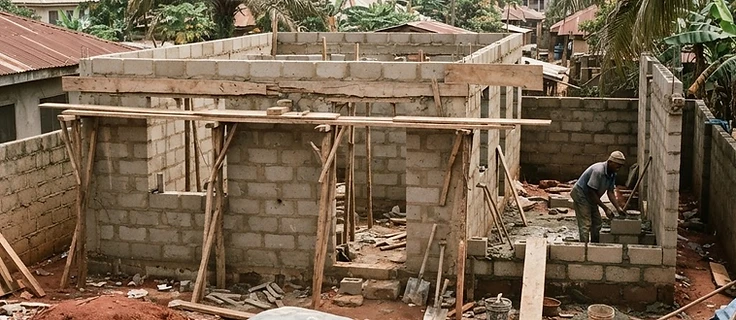
Building your house: a step-by-step construction guide
Construction runs in a known order. Understanding that order lets you check work at the right moment, release payments against completed stages, and spot a problem while it is still inexpensive to correct.

- 01
Planning and design
- Decide on the type and size of house.
- Establish your construction budget.
- Engage an architect.
- Prepare architectural and engineering drawings.
- Obtain the necessary approvals.
- 02
Site preparation
- Clear the land.
- Carry out soil investigation where necessary.
- Confirm levels and drainage.
- Set out the building with the surveyor.
- Prepare the site for construction.
- 03
Foundation
- Excavation to the specified depth.
- Foundation construction to the drawings.
- Reinforcement and concrete work.
- Foundation inspection and relevant tests before moving on.
- 04
DPC and ground floor
- Damp-proof course installed.
- Backfilling in layers and compaction.
- Ground floor concrete work.
- 05
Blockwork
- Wall construction to the approved drawings.
- Door and window openings formed correctly.
- Lintels and columns in place.
- Structural supervision at each lift.
- 06
Roofing
- Roof structure erected and braced.
- Roofing sheets or covering fixed.
- Waterproofing and flashing completed.
- Rainwater drainage and gutters installed.
- 07
First fix installations
- Electrical conduits and boxes installed.
- Plumbing pipes and drainage runs installed.
- Other concealed services completed and photographed.
- 08
Plastering and finishing
- Internal and external plastering.
- Screeding and floor preparation.
- Ceiling installation.
- Tiling, painting, doors and windows.
- 09
Final installations
- Electrical fittings and testing.
- Plumbing fixtures and sanitary ware.
- Kitchen and bathroom installations.
- Security installations.
- 10
External works
- Fencing and gates.
- Paving and walkways.
- Drainage and soakaways.
- Landscaping and external painting.
- 11
Final inspection and handover
- Inspect the completed property against the drawings.
- Correct outstanding defects.
- Test all installations with the contractor present.
- Collect warranties and relevant completion documentation.
Common mistakes to avoid when buying land and building in Abraka
These are the mistakes that recur most often in land and construction transactions here. None of them is unusual, which is exactly why they are worth reading before you start.
- 01Paying for land without verifying ownership.
- 02Buying land based on an agent's verbal assurances.
- 03Failing to inspect the land physically.
- 04Visiting unfamiliar land locations alone.
- 05Ignoring survey plan verification.
- 06Buying land with unresolved family disputes.
- 07Failing to investigate government acquisition.
- 08Paying Omonile or community fees without documentation.
- 09Giving money to unauthorised agents or intermediaries.
- 10Ignoring additional local charges when budgeting.
- 11Starting construction without proper approvals.
- 12Hiring unqualified contractors.
- 13Paying contractors the entire construction budget upfront.
- 14Failing to supervise construction.
- 15Underestimating drainage, soil and flood risks.
Buying land and building in Abraka while living abroad
Buying property remotely requires additional caution. Distance makes good process more valuable, not less: the further away you are, the more your protection depends on documents, named professionals and traceable payments rather than on presence.
- Work with a reputable property company with a verifiable local presence.
- Engage an independent Nigerian property lawyer who acts for you only.
- Appoint a trusted representative through an appropriately drafted Power of Attorney, where necessary.
- Request live video inspections, with location sharing, rather than a set of photographs.
- Arrange an independent physical inspection by your lawyer or surveyor as well.
- Request copies of all documents before making any payment.
- Make payments through traceable channels and confirm the account name first.
- Obtain a receipt for every transaction, without exception.
- Request regular photographic and video construction updates at agreed intervals.
- Arrange independent site inspections at different construction stages.
- Use written contracts with contractors, with a staged payment schedule.
- Avoid relying exclusively on relatives, agents or friends for legal verification.
A representative can inspect, collect documents and attend meetings, but should not be the only person deciding whether a title is sound. Keep the legal verification with your lawyer and the technical verification with your surveyor, so that no single person holds both your money and your judgement.
Based abroad? Let NovaHA Properties help you navigate your property journey in Abraka.
Tell us what you are trying to buy or build, and where you are based. We can inspect on your behalf, document what we find, and work alongside your lawyer and surveyor so decisions are made on evidence rather than on promises.
Start a diaspora enquiryFrequently asked questions
The questions buyers ask us most often about land and construction in Abraka. Where a fee or requirement may change, confirm it with the relevant authority.
It can be, and many buyers complete straightforward purchases here every year. The risk sits in the paperwork rather than in the town: whether the seller can prove ownership, whether the plot matches its survey plan, and whether anything — a family claim, a government interest or an outstanding levy — sits over the land. Independent checks by your own lawyer and surveyor, done before you pay, are what make a purchase safe.
Ask for a Certificate of Occupancy where one exists, the registered deed of assignment, a recent survey plan, excision and gazette documents where the land is family or community land, the previous deeds showing how the seller acquired the plot, and receipts for land charges or ground rent. Also ask for any probate, Power of Attorney or court documents that apply. Which of these is decisive depends on the property, which is why your lawyer should establish the seller's root of title.
Yes. Many plots in and around Abraka change hands on a deed of assignment, a survey plan and receipts rather than a Certificate of Occupancy. That can be perfectly legitimate, but it places more weight on due diligence: the chain of ownership, the family or community authority behind the sale, and the survey details all need to be checked properly before you pay.
Omonile refers to the landowning family or community interest in land. An Omonile payment is a settlement paid to that family, where it applies, for their consent to the transaction. It is not a government fee and it is not automatically payable on every property. Establish exactly who is requesting it, on what authority, and get the agreement and the receipt in writing.
Not universally. Some communities expect a contribution towards agreed local obligations; others do not, and the position can differ from one plot to the next. Ask what the payment covers, who is authorised to collect it, and what you receive in return. If nobody can answer those questions clearly, do not pay until your lawyer has confirmed the position.
There is no legal obligation to make informal payments to individuals or groups who present themselves at a site. Do not make undocumented or unofficial payments. Where you are threatened or intimidated, involve your lawyer and the appropriate community authorities, and report extortion or threats to the relevant authorities.
Do not pay under pressure. Refer back to your written agreement, your receipts and the disclosed list of charges. Ask the person to put the demand in writing, stating on whose authority it is made. Then take it to your lawyer and, where appropriate, to the community leadership, before any money is discussed again.
Yes, and it is common. The essentials are an independent Nigerian lawyer acting for you, a properly drafted Power of Attorney where a representative is needed, live video inspections alongside an independent physical inspection, documents reviewed before payment, and traceable payments with receipts. Ask for scheduled progress reports and photographs rather than occasional updates.
Development is regulated, and construction should not begin until the approvals that apply to your plot and design have been obtained from the relevant Delta State and local planning authorities. Confirm the current requirements, documents and fees directly with those authorities for your specific location, and keep official receipts for everything you pay.
Requirements and inspections at particular construction stages vary, and some site-specific processes may involve a roofing-stage check. Confirm with the relevant planning authority whether a separate roofing-stage permit, inspection or fee applies to your building. Do not pay individuals who demand such a fee without official verification and a receipt.
Check the surveyor's name and seal, the survey number, the date, the coordinates, the dimensions and the boundary description, and look for any notation about government acquisition. Then have a licensed surveyor confirm the coordinates on the ground and, where possible, verify the survey with the appropriate Surveyor-General's office. A plan that cannot be reconciled with the physical plot is a stop sign.
Search the relevant records, ask the community and the immediate neighbours who owns the land and whether anything is in dispute, check for litigation or family claims, and have your lawyer review the chain of ownership. Inspect the plot for signs of competing use, and put your agreement in writing. A written verification report before payment is worth more than any assurance given at a viewing.
Fencing is generally a sensible way to mark possession where it is lawful and permitted on your plot, provided it stays within your surveyed boundaries and does not block access or drainage. Mark the boundaries with a surveyor first, keep receipts for materials, and follow any local requirements that apply to fencing in your area.
There is no single figure. Cost depends on the design, the size, the specification, site conditions such as soil and levels, the cost of materials and labour at the time you build, and professional fees. Get priced drawings and a bill of quantities prepared by a quantity surveyor for your specific design, and treat any per-square-metre figure you hear from a friend or an agent as an opinion rather than a budget.
Yes. We can help you identify plots, arrange and document inspections, coordinate verification of ownership and survey details, guide you through the documentation process, and introduce qualified professionals for design and construction. Legal work is carried out by qualified lawyers and technical verification by licensed surveyors, so the checks are independent of the sale.
Talk to our property teamFree property buyer's resources
All seven checklists are collected in one printable PDF, in the order you would use them: from the first phone call about a plot to the day you collect the keys. Download it once and keep it with your property file.
- 01
Land Buying Checklist
Abraka, Delta State
- 02
Land Document Verification Checklist
What to ask for, and what to confirm
- 03
Land Inspection Checklist
What to record on the day
- 04
Land Acquisition Cost Planner
Write the numbers down before you commit
- 05
Building Approval Checklist
Before construction begins
- 06
House Construction Progress Checklist
Stage by stage, before each payment
- 07
Diaspora Property Investment Checklist
Buying and building from abroad
One combined PDF · seven checklists
Digital or print. Nothing is stored or sent anywhere.
NovaHA Properties · Abraka
Your dream home in Abraka starts with the right decisions.
Whether you are buying your first plot of land, investing in property, relocating to Abraka, or planning to build your dream home, NovaHA Properties is here to help you make informed property decisions.
Legal and editorial disclaimer
This guide is provided by NovaHA Properties for general educational and informational purposes. It is not a substitute for independent legal, surveying, engineering, architectural, tax or professional advice. Land ownership, title verification, community obligations, statutory payments, planning approvals and construction requirements may vary depending on the specific property and applicable laws and regulations in Delta State and Nigeria. Buyers should independently verify all documents, fees and requirements with qualified professionals and relevant government authorities before making payments or commencing construction. NovaHA Properties does not guarantee the legal status of any property solely by virtue of information presented in this guide.